The educational and methodological activity of the English Language Department for Marine Engineers constitutes a key component of the overall educational process. The primary focus of this activity is to address the challenges of enhancing the quality of specialist training in two specializations – Management of Ship Technical Installations and Operation of Ship Electrical Equipment and Automation. Instruction is provided across three levels of higher education (Bachelor’s, Master’s, and Doctor of Philosophy) in both full-time and part-time modes of study.
Bachelor-level training is delivered through two educational programs: a classical program designed for applicants who have completed secondary education, and an abridged program intended for applicants who have graduated from the Maritime College of the Kherson State Maritime Academy (KSMA).
Since the Russian Federation’s military invasion of Ukraine, the Kherson State Maritime Academy has been using a combined (face-to-face and distance) and fully distance learning format to reduce risks for higher education students and scientific and pedagogical employees.
The educational process during practical classes in the educational components (EC) “Maritime English”, “Business English”, “Foreign Language (English) for Academic Purposes” and “Professional Foreign Language (English) for Scientific Communication” at the KSMA is student-centered and aimed at achieving practical results. Its organization is based on two key approaches – communicative and competency-based. The communicative approach involves the active involvement of students in communication and modeling real professional and life situations, while the competency-based approach ensures the gradual formation of professional skills and the ability of future maritime specialists to effectively solve typical professional tasks based on the acquired knowledge and skills.
In the 1st–2nd years of the Bachelor’s level of higher education, practical classes in the EC “Maritime English” have a basic formative character and are structured according to the PPP model (Presentation – Practice – Production). At this stage, the primary focus is placed on mastering fundamental maritime vocabulary and grammar. Students gradually move from comprehension of language material and controlled accuracy of speech to its initial use in typical professionally oriented situations, which ensures the formation of basic communicative skills.
In the 3rd–4th years (classical program) and the 1st–3rd years (abridged program) of the Bachelor’s level, the educational process shifts to a more advanced and integrative level, implemented through the ESA model in a “boomerang” sequence (Engage – Activate1 – Study – Activate2). While at the junior stages students mainly reproduce previously acquired material, at this phase they actively draw on their own learning and quasi-professional experience. The repeated Activate phase at the end of the class is aimed at applying knowledge in more complex conditions—through project-based tasks, problem-situation modeling, and simulation of authentic professional communication on board a vessel, which contributes to the development of learner autonomy and speech flexibility.
In the 5th–6th years of the Master’s level of higher education, within the EC “Business English”, practical classes reach a professional–expert level and are organized according to the Patchwork principle. Unlike previous stages, instruction is based not on simulated but on real professional experience acquired by cadets during seagoing practice. The Patchwork structure ensures the step-by-step integration of linguistic, sociolinguistic, and strategic competences—from motivation and reflection on personal experience (Engage), through in-depth processing of language material (Explore, Practice), to full-scale professional communication (Communicate), which meets the requirements of the international maritime environment.
Thus, the implementation of the communicative competence–based approach in teaching the courses Maritime English and Business English follows a stage-by-stage progression. In the 1st–2nd years of the Bachelor’s program, the PPP model is applied, aimed at the formation of basic lexical, grammatical, and speech skills. In the 3rd–4th years and the 1st, 2nd, and 3rd years of the abridged Bachelor’s program, the ESA (EASA) model is employed, focusing on professionally oriented communication in conditions close to real-life work on board a vessel with a multinational crew. At the Master’s level, the Patchwork model is used, ensuring the integration of language skills and fostering awareness of the ultimate goal of professional foreign-language communication.
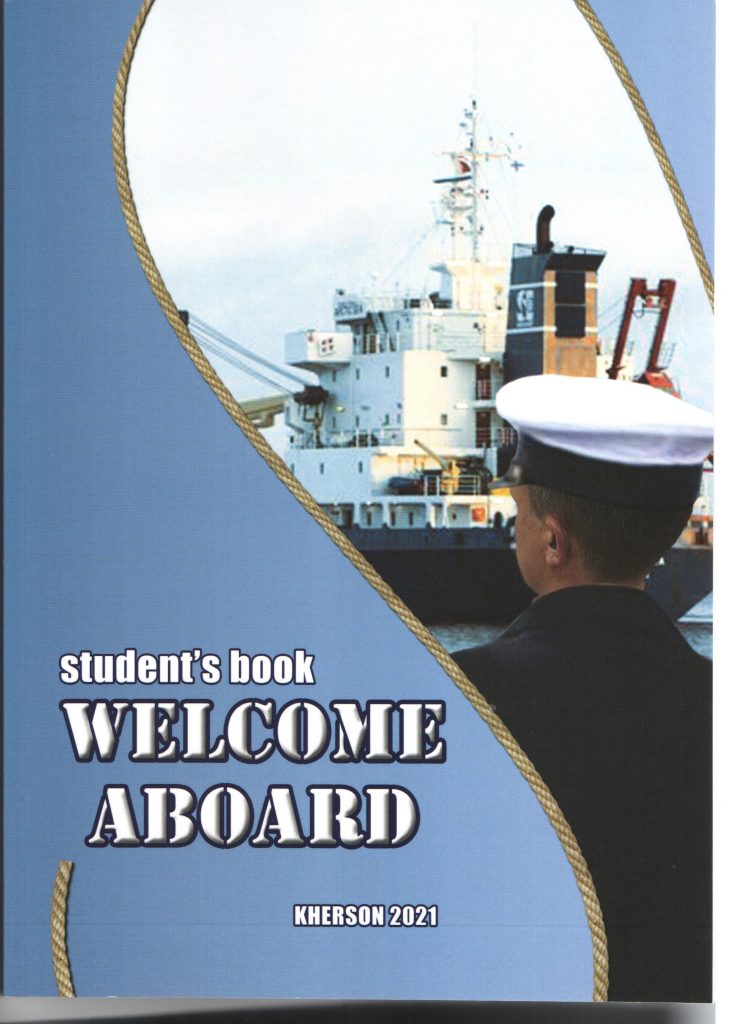
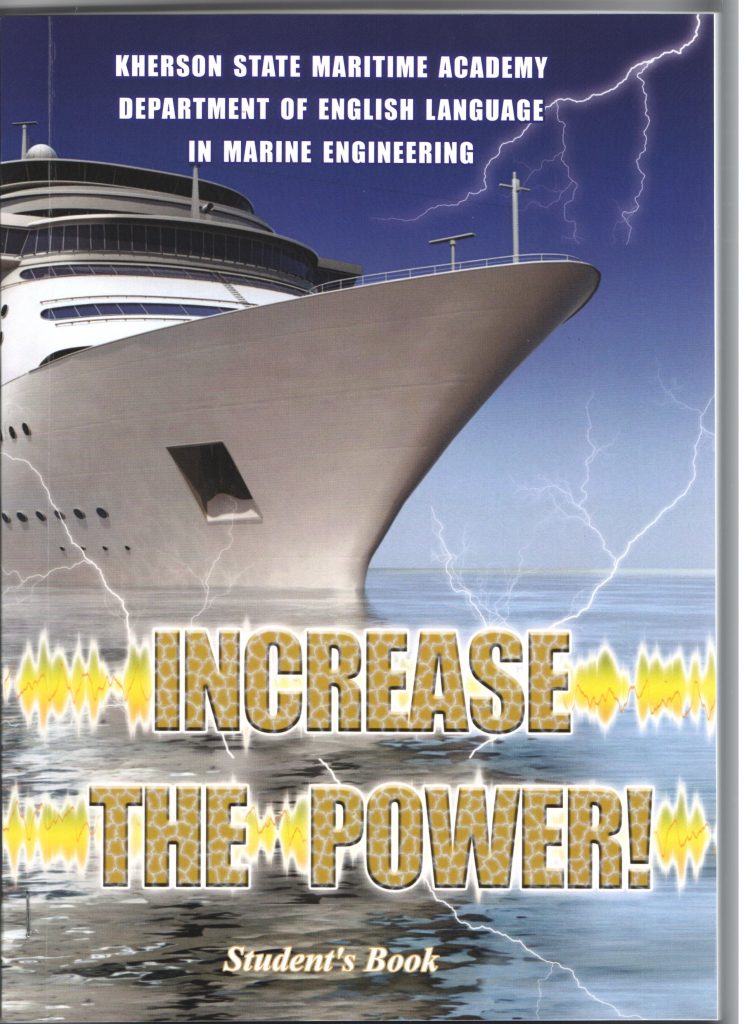
The instructional material is structured into teaching and learning manuals developed by the department’s author teams in accordance with the requirements of the STCW Convention, IMO Model Course 3.17, and the educational and professional program of Specialty 271 “Maritime and Inland Water Transport.”
List of core teaching tutorials:
Modern Propulsion: textbook [O. Tokareva, A. Volkova, A. Yurzhenko]. – Kherson: KSMA, 2025. – 542 p.
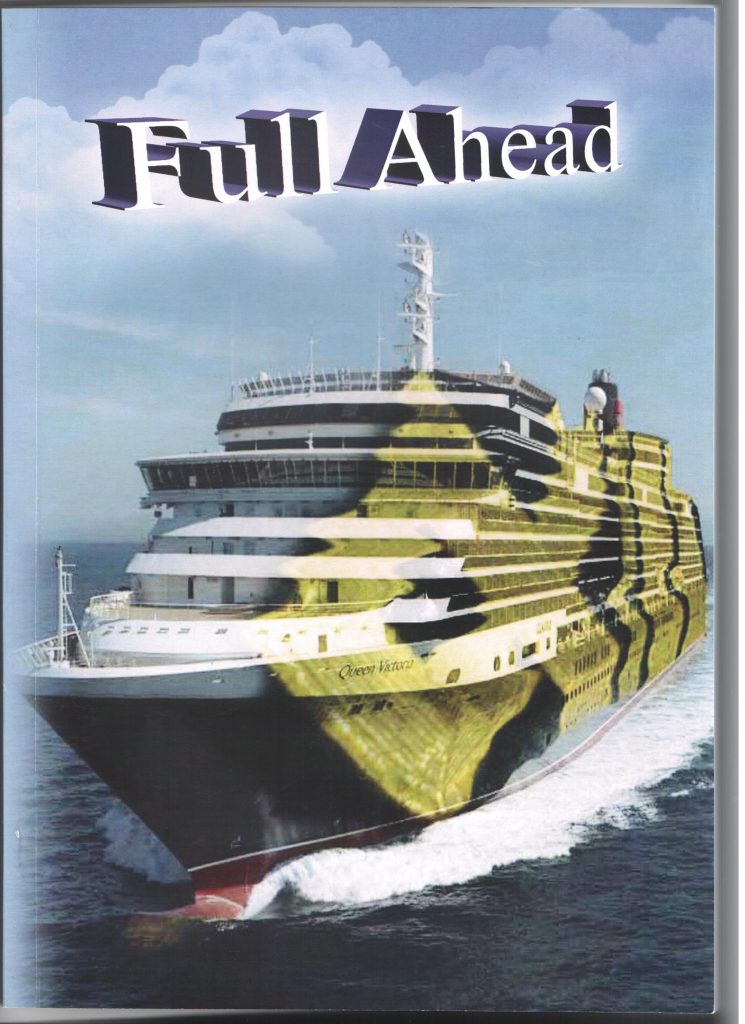
Full Ahead: coursebook [I. Denychenko, V. Kudriavtseva, O. Litikova, O. Tokareva, O. Parkhomenko, A. Yurzhenko, N. Yaresko]. – Kherson: “Timex” PH, 2021. – 190 p.
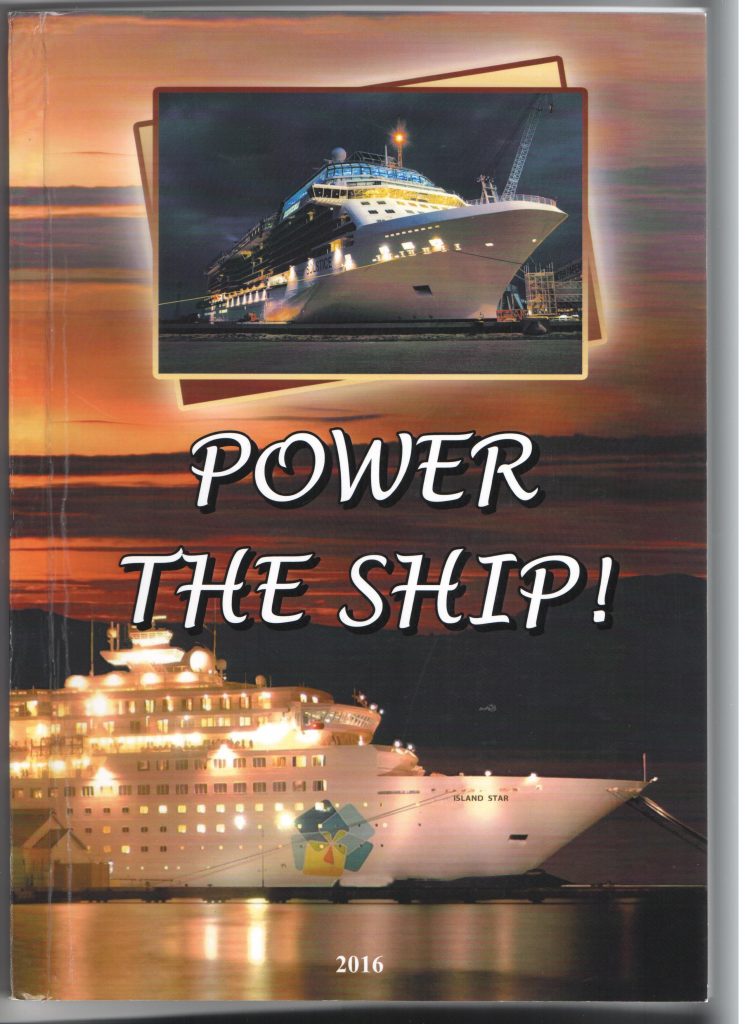
Power the Ship: coursebook [S. Golovina, H. Gukova, A. Korovenkova, M. Ohienko, Yu. Tymoschuk, V. Cherchenko]. – Kherson: “TIMEX” PH, 2021.- 255p.
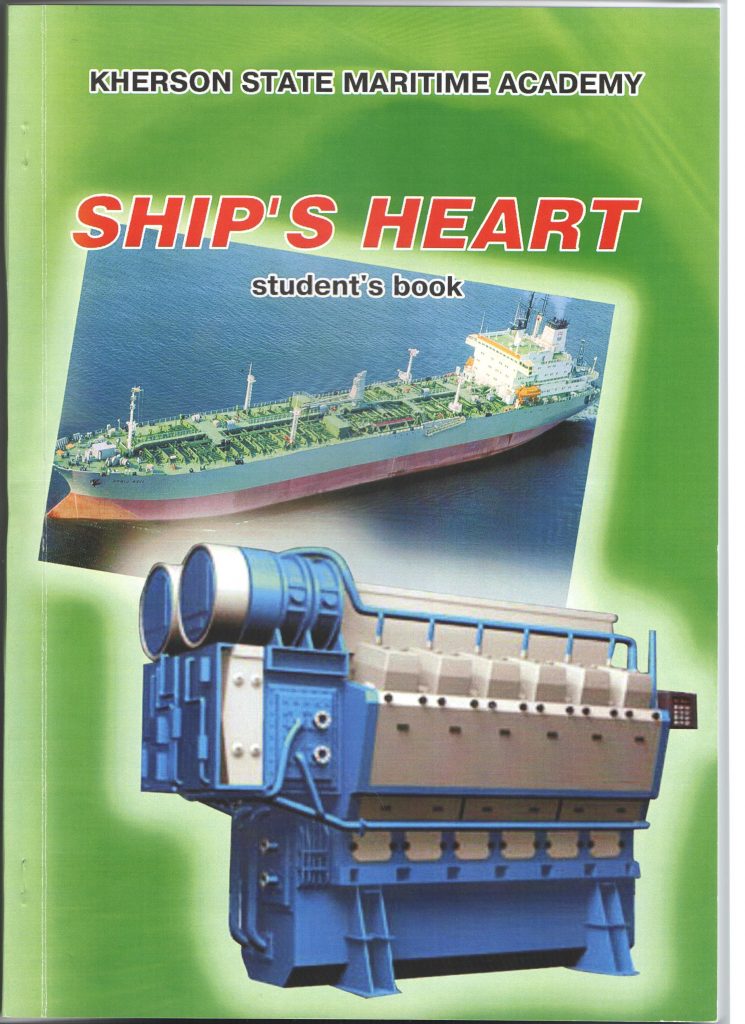
Ship’s Heart: coursebook [I. Afanasievska, Yu. Hryshko, O. Diagyleva, V. Kudriavtseva, O. Litikova, O. Tokareva]. – Kherson: “Borysfen” PH, 2021. – 249 p.
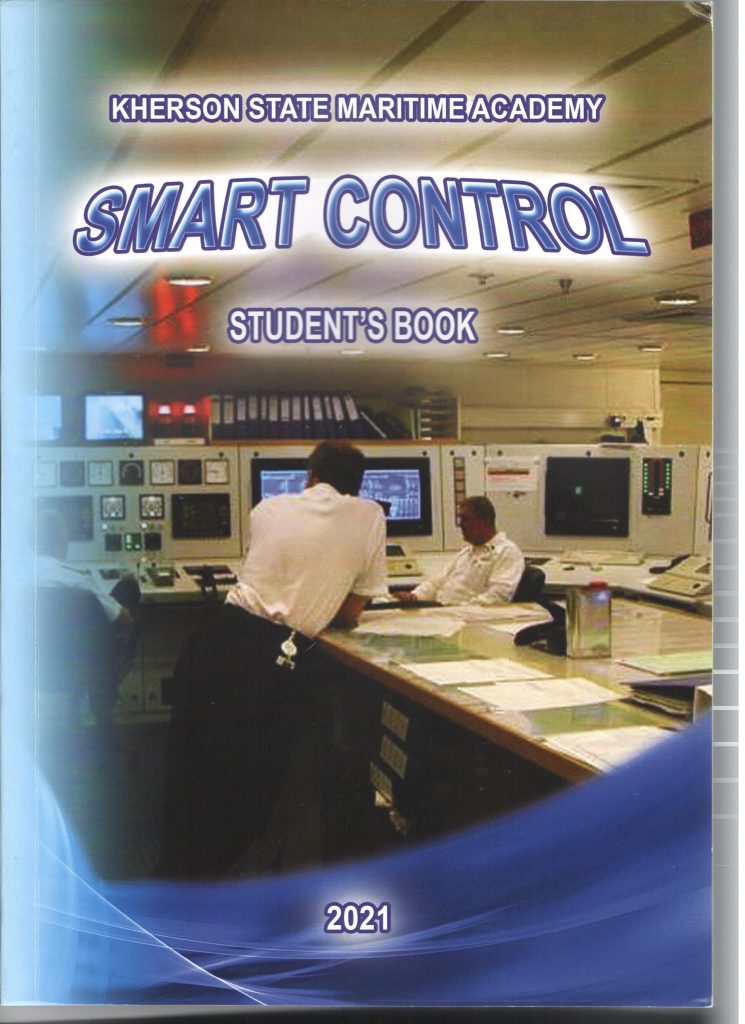
Smart Control: coursebook [Yu. Barzii, O. Litikova, N. Ohorodnyk, H. Solovei, Ya. Usova]. – Kherson: “Borysfen” PH, 2021. – 246 p.
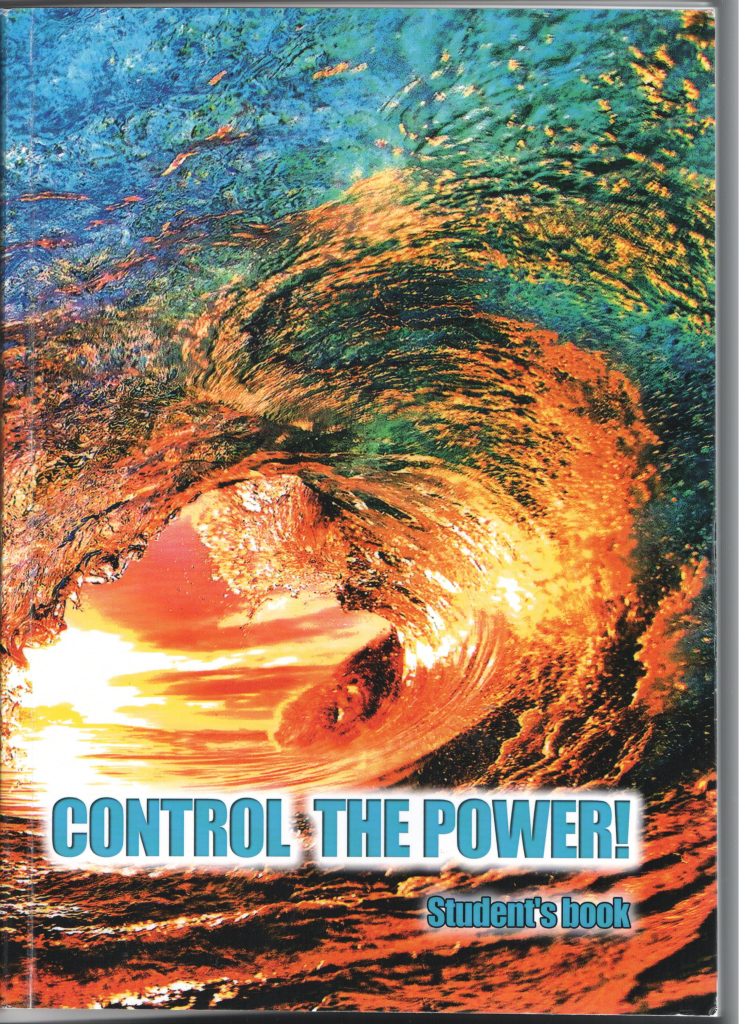
Control The Power!: coursebook [I. Krasnovska, M. Ohyienko, Yu. Tymoschuk]. – Kherson: “TIMEX” PH, 2021. – 162 p.: English.
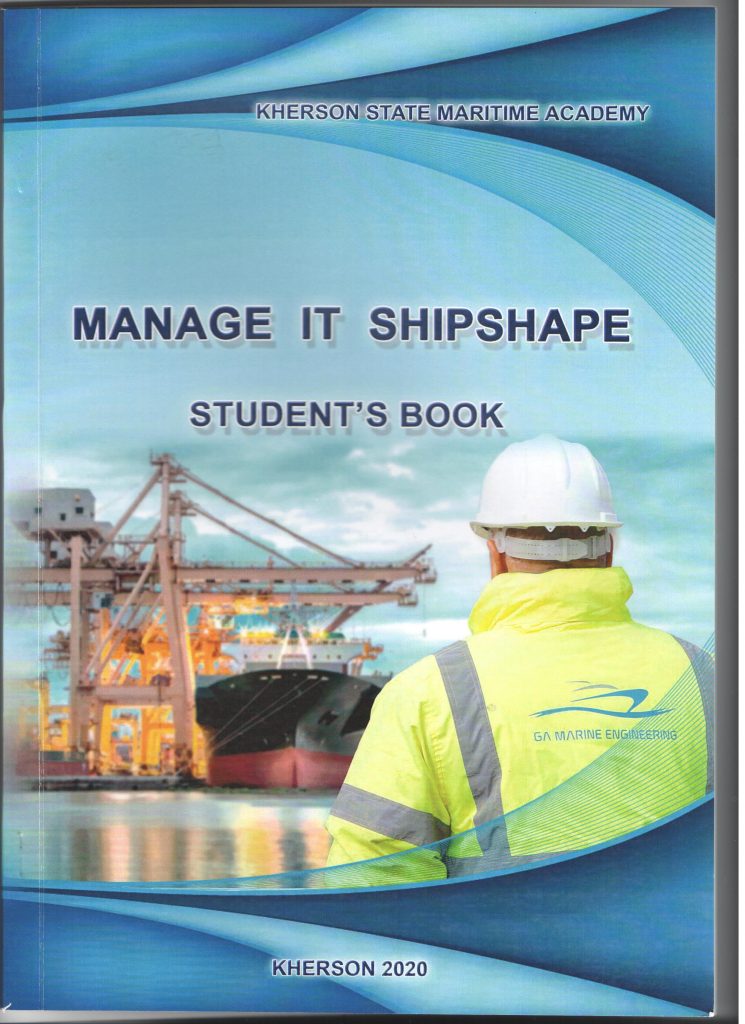
Manage It Shipshape: coursebook [O. Litikova, N. Ohorodnyk, H. Solovei]. – Kherson: “Borysfen” PH, 2021. – 137 p.
Under conditions of distance learning, all author-developed digital materials (modules of teaching manuals, tests, AI-generated video and audio communicative tasks, etc.) are integrated into the MOODLE learning management system (LMS). After registering in the MOODLE LMS, students of the Kherson State Maritime Academy (KSMA) gain access to these materials via the relevant links.
Within the MOODLE LMS, the Students’ Books subcategory contains electronic versions of the department’s teaching tutorials and coursebooks, which are interactively used by all cadets during online classes in EC “Maritime English”. In addition, individual instructor-designed courses (section Tasks) have been implemented to develop cadets’ learning competences through the study of individual modules and the completion of interactive exercises incorporating elements of visualization and contextualization. Assessment of learning outcomes is carried out through continuous and final assessment tests in the Tests section.
Cadets’ independent work is organized in the Self-study Tests section, while individual learning pathways for part-time students are provided in the Part-time Study section. A dedicated course, Interview Guide, was created this year to enhance cadets’ preparation for internal selection procedures and external English-language interviews with representatives of international crewing companies such as Marlow Navigation, Columbia Shipmanagement and others.
To enhance the methodological and digital competences of teaching staff, the department regularly conducts academic and methodological seminars, professional development sessions, workshops, round-table discussions, as well as peer observation and discussion of open classes. The outcomes of these activities are systematized as methodological guidelines and lesson plans in both printed and electronic formats and uploaded to the Workshops section of the MOODLE LMS for further implementation in the educational process.
Overall, the scientific and methodological activities of the department’s academic staff are aimed at updating and revising course syllabi and working programs, developing and maintaining electronic learning courses, improving teaching and learning materials in line with the communicative competence-based approach, producing methodological recommendations for students’ independent learning, and regularly updating test items and examination materials.
The list of Working Curriculum Programs updated in the 2025–2026 academic year by the department includes:
- Working Curriculum Program of the Educational Component “Maritime English.”
1st–3rd SP / 1st–3rd SP (part-time) years. Field of Study: J Transport. Specialty: J5 Maritime and Inland Water Transport. Specialization: J5.02 Management of Ship Technical Systems and Complexes.Developers: Professor Ivan RIABUKHA, Doctor of Pedagogical Sciences; Senior Lecturer Anna VOLKOVA.2025, 24 pp. - Working Curriculum Program of the Educational Component “Maritime English.”
1st–3rd SP / 1st–3rd SP (part-time) years. Field of Study: J Transport and Services.
Specialty: J5 Maritime and Inland Water Transport. Specialization: J5.03 Operation of Ship Electrical Equipment and Automation Systems. Developer: Senior Lecturer Yuliia TYMOSHCHUK. 2025, 24 pp. - Working Curriculum Program of the Educational Component “Maritime English.”
1st–3rd SP / 1st–3rd SP (part-time) years. Field of Study: 27 Transport. Specialty: 271 Maritime and Inland Water Transport. Specialization: 271.02 Management of Ship Technical Systems and Complexes. Developers: Professor Ivan RIABUKHA, Doctor of Pedagogical Sciences; Senior Lecturer Anna VOLKOVA. 2025, 24 pp. - Working Curriculum Program of the Educational Component “Maritime English.”
1st–3rd SP / 1st–3rd SP (part-time) years. Field of Study: 27 Transport. Specialty: 271 Maritime and Inland Water Transport. Specialization: 271.03 Operation of Ship Electrical Equipment and Automation Systems. Developers: Professor of the Department of English for Marine Engineering, Ivan RIABUKHA, Doctor of Pedagogical Sciences; Senior Lecturer Yuliia TYMOSHCHUK. 2025, 24 pp. - Working Curriculum Program of the Educational Component “Business English.”
1st–2nd Master’s / 1st Master’s (part-time) years. Field of Study: J Transport and Services. Specialty: J5 Maritime and Inland Water Transport. Specialization: J5.02 Management of Ship Technical Systems and Complexes. Developer: Associate Professor Oleksandra LITIKOVA, PhD in Pedagogy. 2025, 32 pp. - Working Curriculum Program of the Educational Component “Maritime English.”
1st–5th years (full-time and part-time).Field of Study: J Transport. Specialty: J5 Maritime and Inland Water Transport. Specialization: J5.02 Management of Ship Technical Systems and Complexes. Developers: Associate Professor Hanna SOLOVEI, PhD in Philology; Senior Lecturers Iryna AFANASIEVSKA and Nadiia POHORLETSKA. 2025, 45 pp. - Working Curriculum Program of the Educational Component “Business English.”
1st–2nd Master’s / 1st Master’s (part-time) years. Field of Study: J Transport. Specialty: J5 Maritime and Inland Water Transport. Specialization: J5.03 Operation of Ship Electrical Equipment and Automation Systems. Developer: Senior Lecturer Maryna OHIIENKO. 2025, 23 pp. - Working Curriculum Program of the Educational Component “Maritime English.”
1st–5th years (full-time and part-time). Field of Study: J Transport and Services. Specialty: J5 Maritime and Inland Water Transport. Specialization: J5.03 Operation of Ship Electrical Equipment and Automation Systems. Developer: Senior Lecturer Uliana LIASHENKO, PhD in Pedagogy. 2025, 37 pp. - Working Curriculum Program of the Educational Component “Maritime English.”
1st–5th years (full-time and part-time). Field of Study: 27 Transport. Specialty: 271 Maritime and Inland Water Transport. Specialization: 271.02 Management of Ship Technical Systems and Complexes. Developers: Associate Professor Hanna SOLOVEI, PhD in Philology; Senior Lecturers Iryna AFANASIEVSKA and Nadiia POHORLETSKA. 2025, 45 pp. - Working Curriculum Program of the Educational Component “Business English.”
1st–2nd Master’s / 1st Master’s (part-time) years. Field of Study: 27 Transport. Specialty: 271 Maritime and Inland Water Transport. Specialization: 271.02 Management of Ship Technical Systems and Complexes. Developer: Associate Professor Oleksandra LITIKOVA, PhD in Pedagogy. 2025, 32 pp. - Working Curriculum Program of the Educational Component “Business English.”
1st–2nd Master’s / 1st Master’s (part-time) years. Field of Study: 27 Transport.
Specialty: 271 Maritime and Inland Water Transport. Specialization: 271.03 Operation of Ship Electrical Equipment and Automation Systems. Developer: Senior Lecturer Maryna OHIIENKO. 2025, 23 pp. - Working Curriculum Program of the Educational Component “Maritime English.”
1st–5th years (full-time and part-time). Field of Study: 27 Transport. Specialty: 271 Maritime and Inland Water Transport. Specialization: 271.03 Operation of Ship Electrical Equipment and Automation Systems. Developer: Senior Lecturer Uliana LIASHENKO, PhD in Pedagogy. 2025, 37 pp. - Working Curriculum Program of the Educational Component “Foreign Language (English) for Academic Purposes.” 1st year / 1st year (part-time). Field of Study: G Engineering, Manufacturing, and Construction. Specialty: G8 Materials Science. Developer: Head of the Department, Associate Professor Nataliia OHORODNYK, PhD in Pedagogy. 2025, 16 pp.
- Working Curriculum Program of the Educational Component “Foreign Language (English) for Academic Purposes.” 1st year / 1st year (part-time). Field of Study: 17 Electronics, Automation, and Electronic Communications. Specialty: 174 Automation, Computer-Integrated Technologies, and Robotics. Developer: Head of the Department, Associate Professor Nataliia OHORODNYK, PhD in Pedagogy. 2025, 16 pp.
- Working Curriculum Program of the Educational Component “Foreign Language (English) for Academic Purposes.” Field of Study: J Transport and Services. Specialty: J5 Maritime and Inland Water Transport. Developer: Head of the Department, Associate Professor Nataliia OHORODNYK, PhD in Pedagogy. 2025, 17 pp.
- Working Curriculum Program of the Educational Component “Foreign Language (English) for Academic Purposes.” Field of Study: J Transport and Services. Specialty: J5 Maritime and Inland Water Transport. Developer: Head of the Department, Associate Professor Nataliia OHORODNYK, PhD in Pedagogy. 2025, 16 pp.
- Working Curriculum Program of the Educational Component “Professional Foreign Language (English) for Academic and Scientific Communication.” Field of Study: J Transport and Services. Specialty: J5 Maritime and Inland Water Transport. Developer: Head of the Department, Associate Professor Nataliia OHORODNYK, PhD in Pedagogy. 2025, 16 pp.